
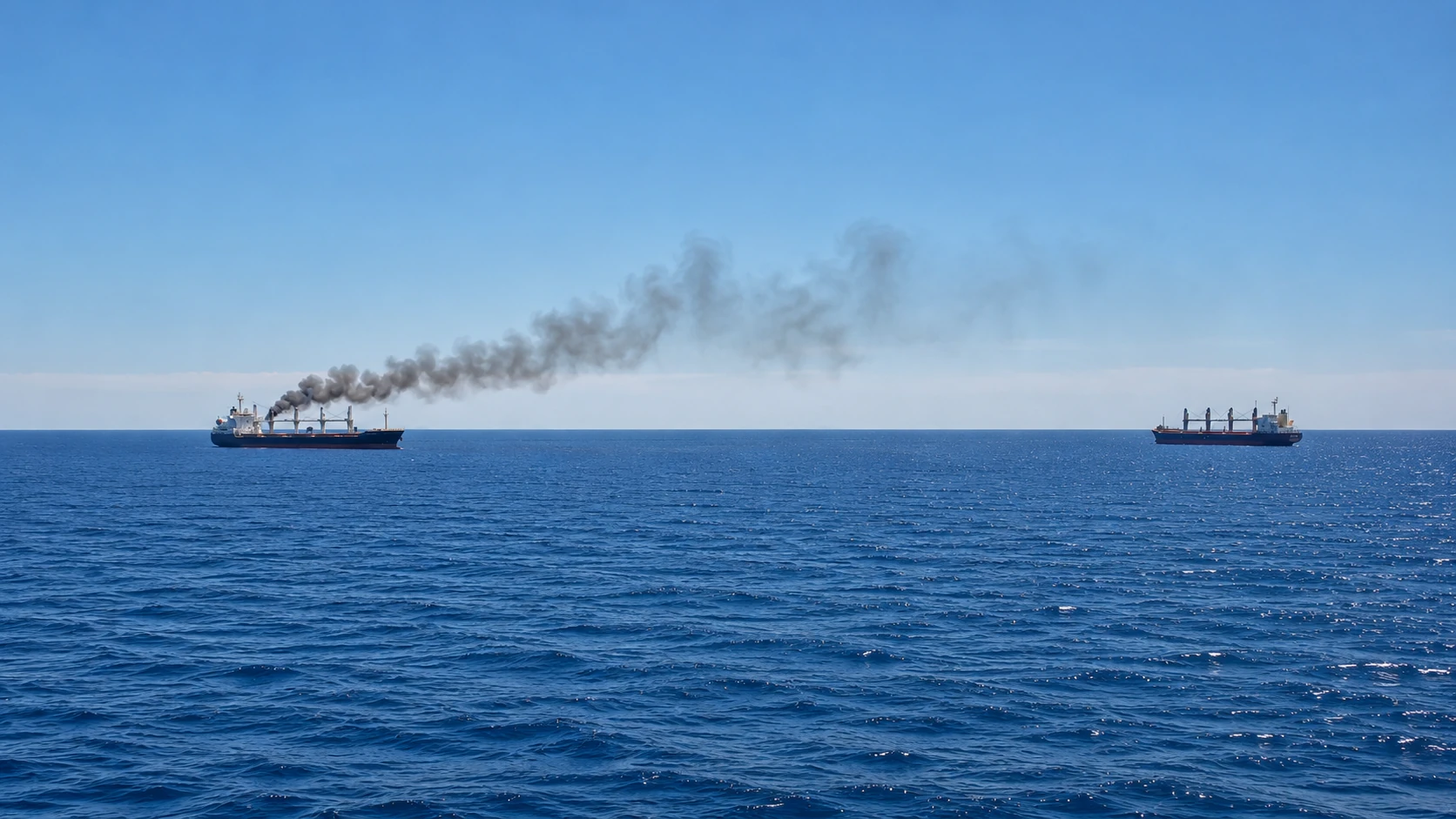
A renewed series of reported attacks involving merchant shipping and port areas has raised the operational risk profile for Black Sea commodity trades. On 4 August, the Associated Press reported that Russia said a bulk carrier carrying military cargo had been damaged in Mykolaiv and that another vessel unloading military cargo had been hit at Pivdennyi. The report also said Turkey had reiterated its appeal for safe passage after two Turkish-owned ships were attacked by drones after departing Novorossiysk. The vessel identities, cargo documentation, extent of damage, and any subsequent restrictions on port operations were not independently established in the material reviewed.
The development is relevant to dry-bulk and commodity interests because Mykolaiv and the wider Ukrainian Black Sea port system are closely connected to agricultural and industrial export logistics, while Novorossiysk is a major Russian outlet for grain, coal, petroleum products and other bulk cargoes. Even where a specific incident concerns alleged military cargo rather than commercial agricultural cargo, repeated attacks near merchant traffic and port infrastructure can affect port calls, pilotage, crew willingness, charter-party risk allocation, war-risk additional premiums, security procedures and the availability of marine services.
Verified facts should be separated from wider market interpretation. The verified element is that an international news report recorded Russian claims of vessel damage at Mykolaiv and Pivdennyi and Turkey’s renewed call for safer navigation after attacks on Turkish-owned vessels leaving Novorossiysk. Russian official channels had already made public claims in late July that strikes at Mykolaiv targeted dry-cargo ships and transhipment infrastructure allegedly connected with military cargoes. Ukrainian authorities have previously described attacks on civilian maritime logistics and commercial vessels in the Odesa region. Those accounts demonstrate a continuing pattern of competing wartime allegations; they do not, by themselves, confirm the cargo status or legal character of every vessel reportedly struck.
For owners, charterers and cargo interests, the immediate issue is not necessarily a closure of a Black Sea export corridor, but a higher probability of voyage disruption or loss exposure. Fixtures and port-call plans should be checked for war-risk clauses, deviation rights, safe-port wording, cancellation provisions, security-related notices, crew-consent arrangements and the allocation of waiting time and extra insurance cost. Masters should obtain current security intelligence and port-agent confirmation before approach, remain alert to changes in navigation notices, and preserve contemporaneous records of routing, communications, cargo condition and any delay.
Why this matters: commodity flows can remain physically possible while becoming commercially less predictable. In this environment, the decisive risk is often not only damage to a vessel, but the combined effect of delayed berthing, changes in underwriters’ conditions, reduced service availability and disputes over whether a developing threat falls within agreed contractual protections.
Technology supported research and drafting. TWS retains editorial responsibility for the published content and cited sources.
Need operational support?