Brazil’s National Waterway Transportation Agency (ANTAQ) scheduled and listed a virtual public hearing at 09:30 on 6 August 2026 for the proposed lease of ITJ01, an area in the organised Port of Itajaí dedicated to containerised and general cargo. The agency’s consultation page was updated at 11:52 on the same day and continued to show the hearing in its official timetable. Written contributions on the draft technical and legal documents remain open through 23:59 on 13 August.
The verified point is procedural: ANTAQ is collecting comments before a future tender, not awarding the terminal or announcing a selected operator. The consultation concerns the proposed lease documentation, including project guidelines, draft tender and contract documents, and the technical-economic-environmental feasibility material. ANTAQ’s stated purpose is to improve those documents ahead of the competitive process.
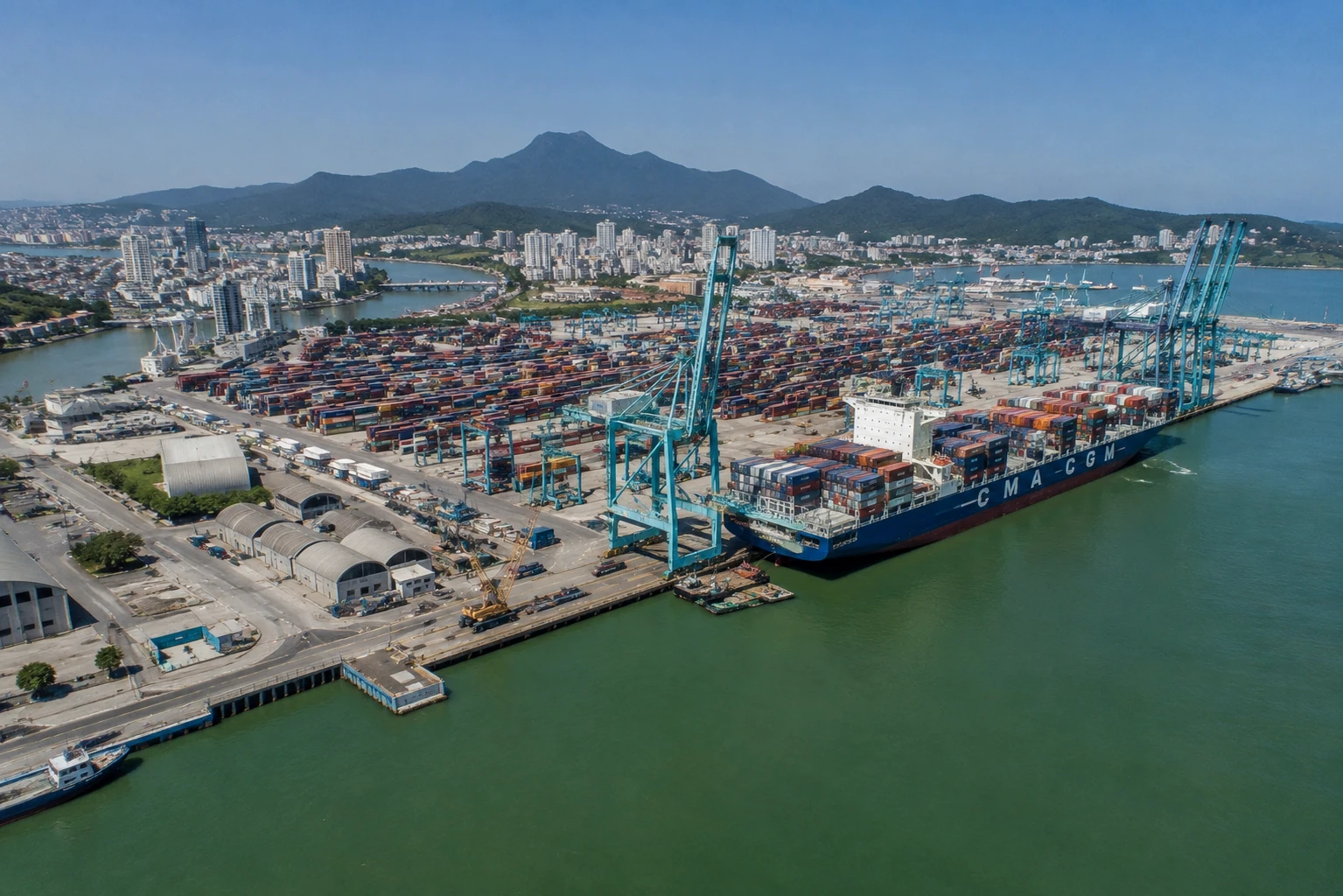
The project is operationally significant because it concerns a container and general-cargo terminal within a port complex whose traffic profile has historically been heavily container-based. ANTAQ’s market-study material identifies the regional export base as strongly linked to animal protein and forest products, while imports include industrial and consumer inputs. Those cargo characteristics make terminal continuity, reefer capability, gate performance, yard planning and berth-window reliability material issues for carriers, cargo interests and insurers.
No operational restriction, closure, congestion event or change in vessel access was announced in the hearing notice. Equally, the public-hearing stage does not by itself establish final lease terms, capital commitments, performance guarantees, tariffs, a tender date or a start-of-operations date. These remain subject to the conclusion of consultation, ANTAQ’s subsequent decisions and the formal tender process.
Why this matters: operators with calls or cargo exposure in the Itajaí complex should treat the consultation as a near-term opportunity to test whether draft obligations adequately address transition arrangements, service continuity, reefer and dangerous-goods procedures, marine-interface responsibilities, data exchange and incident allocation. Charterers and cargo owners should avoid assuming that the future terminal structure is settled until final tender documents are issued. For P&I and claims teams, the key practical issue is preserving clear evidence of terminal handover responsibilities and cargo-custody interfaces if the project proceeds.
TWS assessment: this is a current regulatory milestone rather than an immediate disruption. The next confirmed deadline is 13 August 2026 for written submissions; no official hearing outcome had been published on the consulted ANTAQ page at the time of review.
Technology supported research and drafting. TWS retains editorial responsibility for the published content and cited sources.
Need operational support?