
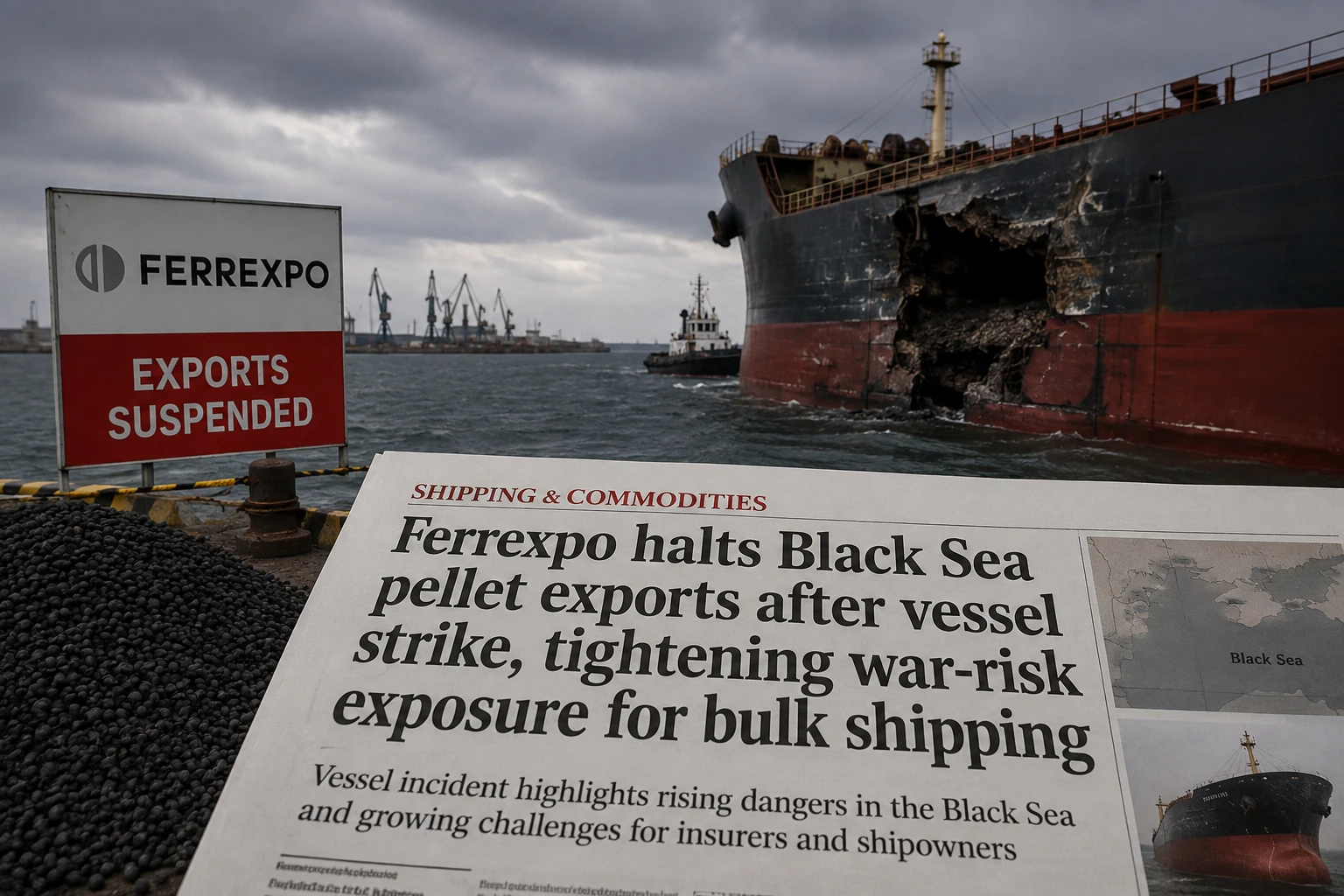
Iron-ore pellet bulk-cargo operations: Ferrexpo says its near-term Black Sea export route became unavailable after a vessel carrying DR-grade pellets was struck.
Ferrexpo said on 28 July that a vessel carrying 55,000 tonnes of its direct-reduction-grade (DR-grade) iron-ore pellets was struck and damaged by Russian drones while sailing in Ukrainian Black Sea waters. The producer said one crew member died in the incident. It also said the ensuing vessel cancellations mean it expects no further exports through that sea route for the foreseeable future.
The disruption is material for the Ukraine-focused iron-ore producer. Ferrexpo had been increasing production and planned sales of its highest-grade pellets for export through Black Sea ports to customers in the Middle East during the second half of 2026. The company reported roughly 189,000 tonnes of pellets designated for shipment: 55,000 tonnes aboard the affected vessel and about 90,000 tonnes held in stockpiles. It estimated that production and delivery costs associated with the affected inventory could reach about US$20 million.
The event follows a broader deterioration in Black Sea navigation conditions. Reuters reported on 23 July that shipowners had halted arrivals at Ukraine’s Black Sea ports after intensified Russian strikes raised concerns for commercial navigation. On 24 July, Ukraine’s Ministry of Foreign Affairs separately urged shipowners to temporarily suspend calls at Russian Black Sea ports, citing security concerns and risks to vessels and crews. These official and company statements demonstrate an environment in which commercial operators face exposure on both sides of the basin, although specific risk conditions and port-access decisions remain voyage-dependent.
Ferrexpo said the loss of the route has a significant negative effect on liquidity and that it expected accessible net cash to last only until the end of August 2026, absent additional funding. It is pursuing an equity raise of at least US$100 million. The company’s funding position is a corporate consequence of the interruption, rather than evidence that Black Sea iron-ore trade as a whole has stopped.
Why this matters: the immediate operational issue is not only cargo availability but whether owners, charterers, operators and insurers can obtain acceptable security, war-risk and port-call terms for bulk voyages connected with Ukrainian and Russian Black Sea ports. For cargo interests, the case underlines the need to reassess laycan assumptions, alternative discharge or loading options, cancellation provisions, safe-port warranties, crew-consent procedures and insurance notifications. For masters and operators, voyage planning should be based on current security advice, flag-state and port instructions, and underwriter requirements—not on prior corridor experience. The situation remains highly volatile and presents a high risk to personnel, hull, cargo and schedule reliability.
Technology supported research and drafting. TWS retains editorial responsibility for the published content and cited sources.
Need operational support?