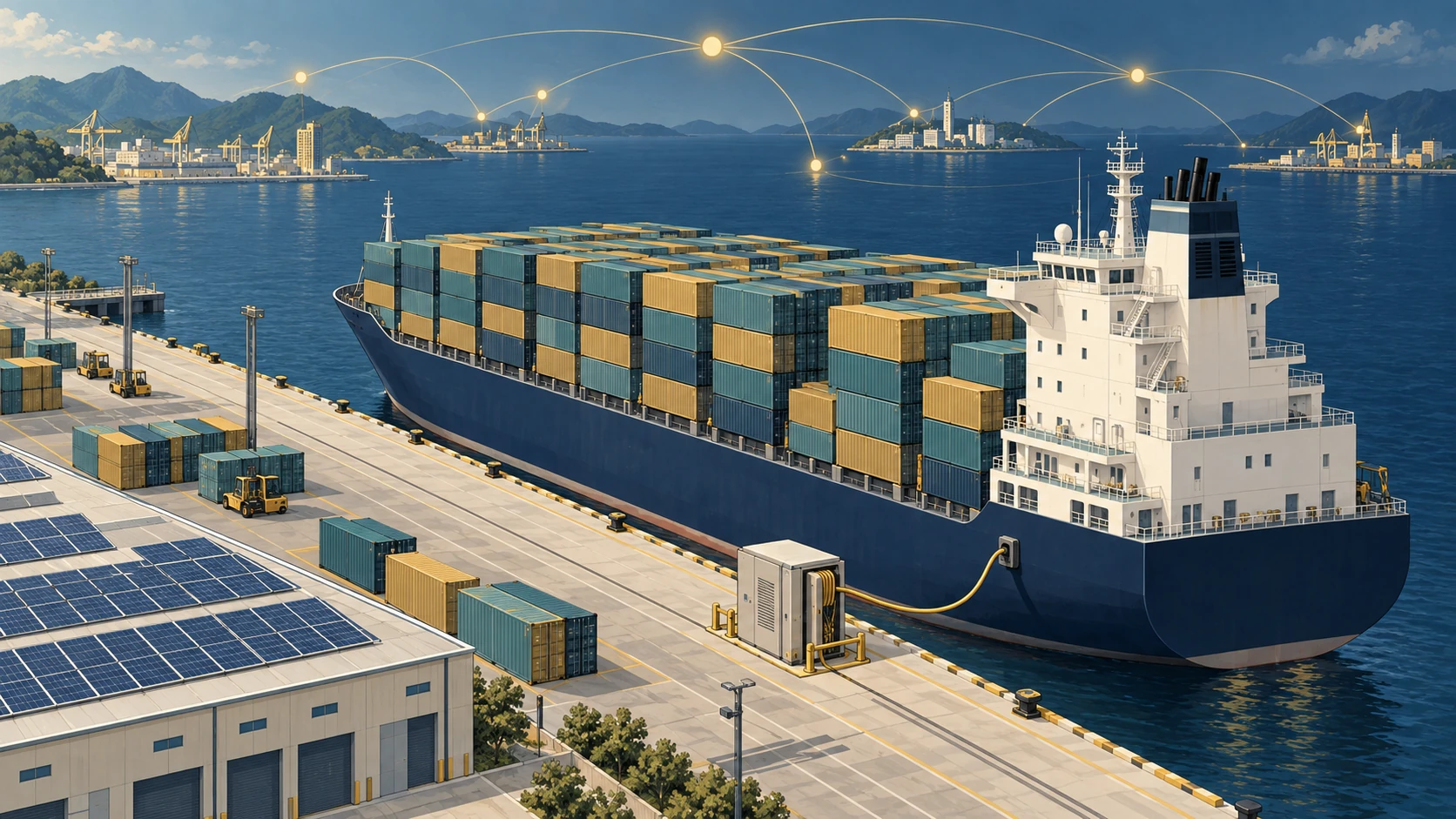

ABS announced on 21 September that it has granted Approval in Principle (AIP) to HD Hyundai Heavy Industries and HD Korea Shipbuilding & Offshore Engineering for the basic design of a 22,000 m³ multi-purpose bunkering vessel capable of supplying ammonia as marine fuel. The approval, announced at Gastech 2026, followed a joint development project started earlier this year. ABS said its review covered the general and machinery arrangements, ammonia cargo-handling system and fuel-supply system against applicable class and international requirements.
The verified significance is infrastructural rather than commercial: the AIP gives the parties a class-reviewed design basis for a relatively large ammonia bunker-supply vessel. It does not constitute an order to build the vessel, flag-state approval, permission to bunker in a particular port, or evidence that a commercial ammonia-bunkering service is available. Those steps will still require detailed engineering, risk assessments, port and terminal procedures, crew competence, emergency-response arrangements and authorisations in the relevant jurisdiction.
The timing is notable. The IMO’s Research and Development Forum in Singapore on 21-22 September is focused on knowledge and capability gaps in responding to spills involving alternative marine fuels, including ammonia. That context matters because ammonia’s prospective role as a low-carbon fuel is inseparable from its acute toxicity and the need for tightly controlled transfer, detection, ventilation, containment and emergency procedures.
For shipowners and charterers, the development is a practical signal that the industry is progressing from ammonia-ready ship concepts toward the enabling logistics chain. However, it should not be read as evidence that fuel availability will match vessel orders. Bunker-vessel design is only one link between production, storage, quality assurance, port permissions and shipboard consumption.
For masters, operators, P&I interests and insurers, the immediate value lies in the direction of travel: ammonia bunkering will increasingly need to be assessed as an end-to-end operational risk, not solely as a fuel procurement decision. Contractual allocation of off-specification, quantity, delay, shutdown and incident-response risks will need to keep pace with the technical design work. Cargo owners and logistics planners should also distinguish a vessel’s ammonia-ready notation from actual ammonia operation when assessing emissions claims or transport-service continuity.
Why this matters: scalable alternative-fuel deployment depends on safe transfer infrastructure as much as on engines. This AIP is a credible engineering milestone, but its commercial relevance will depend on conversion into approved, trained and port-integrated operations.
Technology supported research and drafting. TWS retains editorial responsibility for the published content and cited sources.
Need operational support?