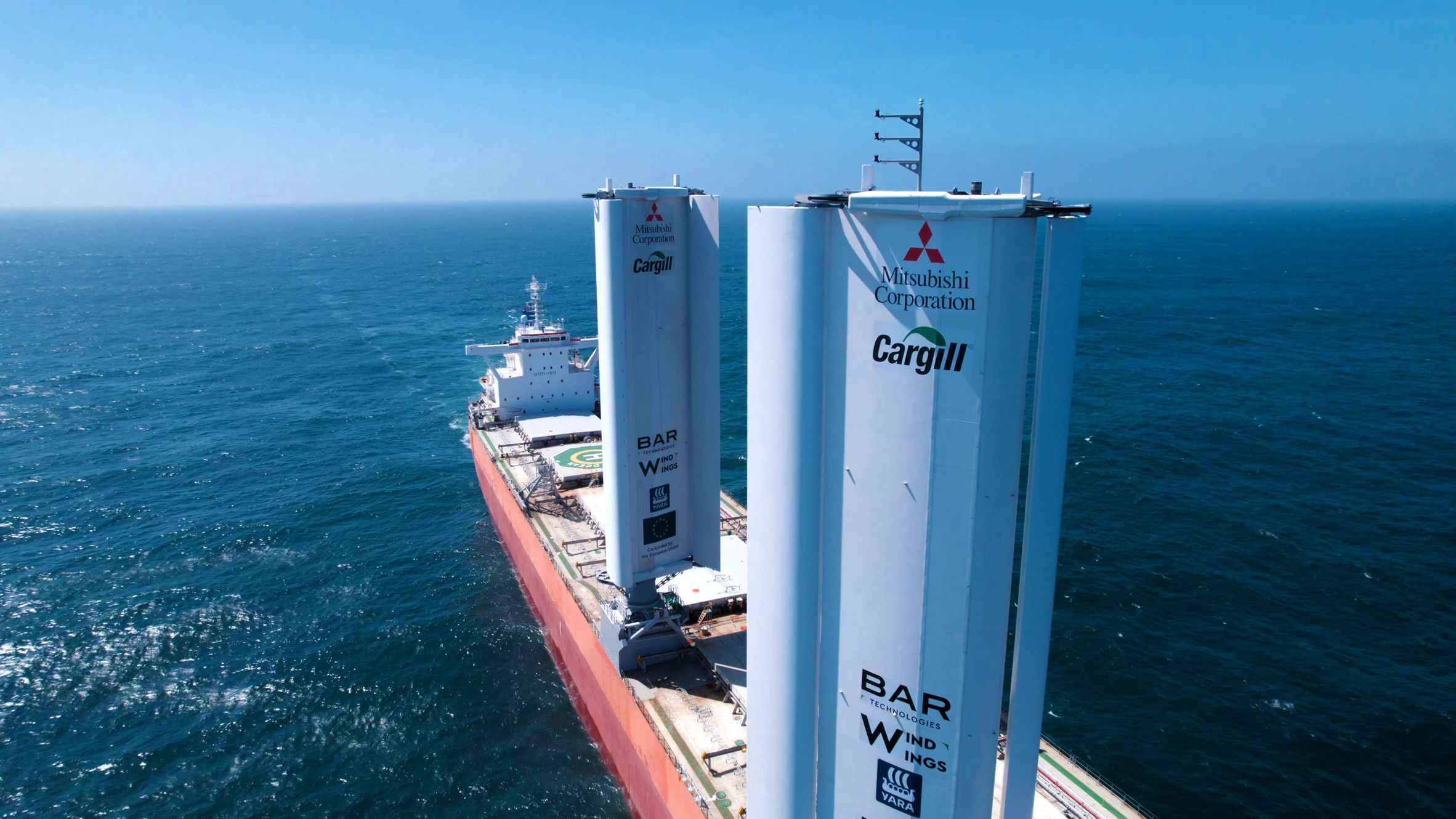
Wind-assisted propulsion is among the zero-emission technologies eligible for support under the European Commission’s proposed SMAP mechanism, subject to adoption and detailed rules. Credit: https://www.dezeen.com/2023/08/22/pyxis-ocean-windwings-wind-powered-cargo-ship/
On 17 July 2026, the European Commission proposed a targeted revision of the EU Emissions Trading System (EU ETS) that would create a dedicated maritime support mechanism alongside changes to scope, monitoring and anti-evasion provisions. The proposal is not yet law: it must proceed through the EU legislative process.
Its central shipping measure is the proposed Sustainable Maritime Alternative Propulsion (SMAP) mechanism. From 2028, or the first year after the amended directive enters into force, through 2040, up to 110 million EU ETS allowances would be reserved for shipping companies. The stated purpose is to cover part of the remaining price differential between fossil marine fuels and eligible sustainable maritime fuels, and part or all of the additional cost of deploying and operating eligible zero-emission propulsion technologies.
The proposal expressly includes electric and wind-assisted propulsion. Eligible fuels would include qualifying biogas and advanced biofuels, renewable fuels of non-biological origin, and qualifying low-carbon hydrogen and fuels. The draft provides differentiated support rates: 55% of the remaining price gap for qualifying biogas and advanced biofuels, 90% for eligible renewable fuels of non-biological origin, 80% for qualifying low-carbon hydrogen and fuels, and 90% of additional costs for eligible zero-emission propulsion. Support would be based on verified use or operation in the preceding calendar year, subject to detailed future rules and potential pro-rata reductions if applications exceed the annual allowance available.
The wider proposal would also extend ETS coverage to specified vessel categories below 5,000 GT but not below 400 GT, strengthen safeguards against evasive port calls and offshore-operation-related avoidance, and simplify maritime monitoring, reporting and verification. It includes a review mechanism should the IMO adopt a global market-based measure, intended to address potential double payment while preserving the EU ETS price signal.
Why this matters: the proposal would shift part of maritime decarbonisation support from general policy ambition to a defined, performance-linked allowance allocation model. For owners and operators, the operational value will depend on auditable fuel provenance, verified emissions performance, voyage eligibility and clear charter-party allocation of ETS costs and benefits. Charterers and cargo interests should note that allowance support may affect the economics of alternative-fuel voyages, but the draft says allocations must be considered where ETS costs are contractually transferred. P&I interests, insurers and claims handlers should expect greater scrutiny of bunker documentation, fuel claims, emissions data and the allocation of compliance responsibilities.
The origin conditions in the draft are commercially significant. In general, supported fuels and propulsion technologies would need to be produced or manufactured in the EU, an ETS-linked third country, or a third country receiving EU support for capped carbon pricing, with limited exceptions for listed non-EU green-corridor ports. Brazilian suppliers, ports and shipowners serving EU trades should therefore monitor the eventual eligibility rules rather than assume that a low-carbon fuel alone will qualify.
Credit: https://www.dezeen.com/2023/08/22/pyxis-ocean-windwings-wind-powered-cargo-ship/.
Technology supported research and drafting. TWS retains editorial responsibility for the published content and cited sources.
Need operational support?