
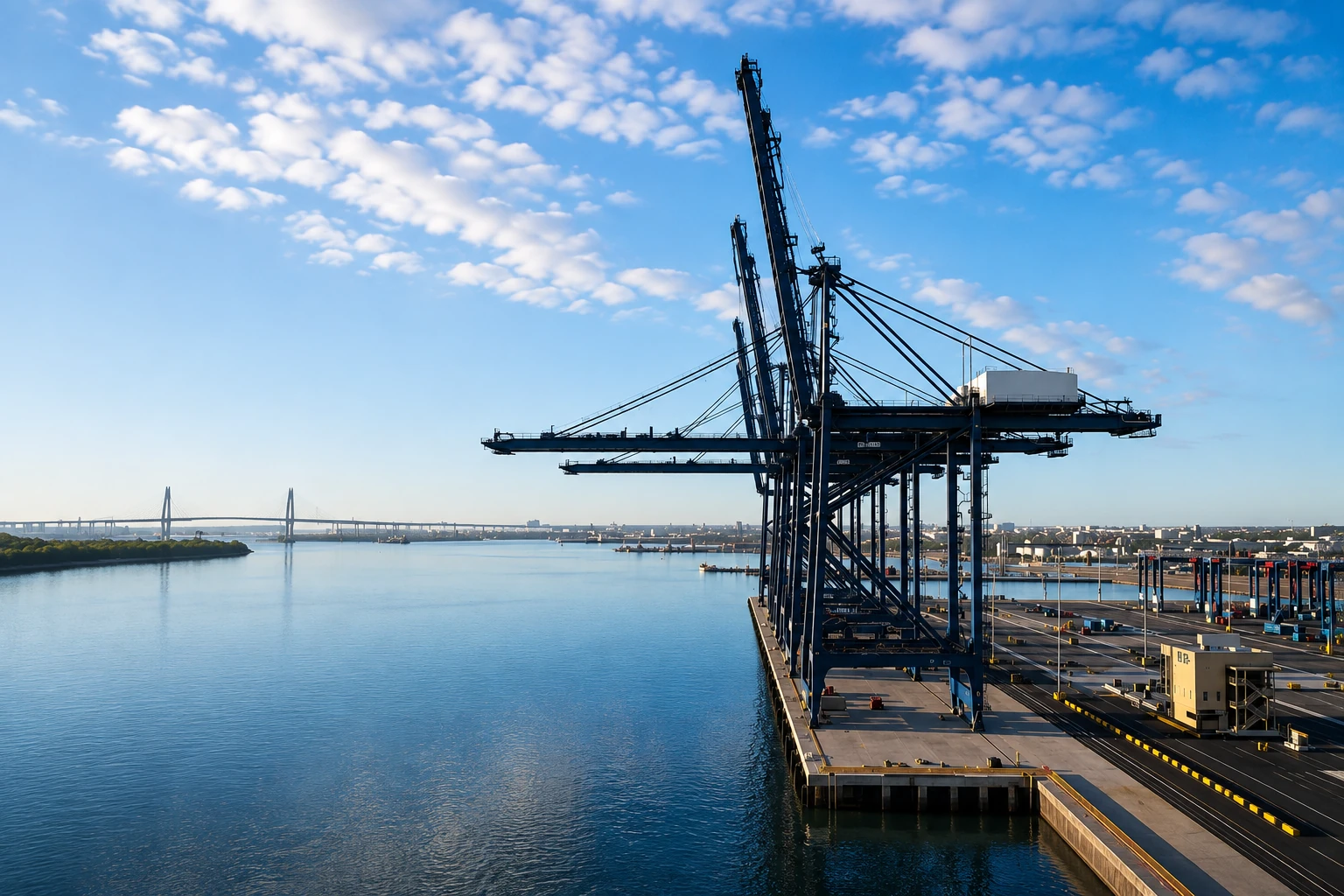
South Carolina Ports (SC Ports) said it would pause container operations at the Hugh K. Leatherman Terminal from **August 1, 2026**, consolidating activity at the Port of Charleston’s Wando Welch and North Charleston terminals. The authority announced the decision on June 25, describing it as a short-term measure amid industry headwinds, an uncertain trade forecast and tempered cargo volumes. SC Ports said the two receiving terminals have capacity for current volumes and short-term growth.
The August 1 effective date has now passed. In the official and independent material reviewed for this briefing, SC Ports had not published a separate post-implementation notice confirming completion of the transfer or setting an end date for the pause. Operational parties should therefore treat carrier, terminal and agent instructions—not the original announcement alone—as the controlling source for individual calls and cargo moves.
Independent local reporting said the terminal’s shutdown was expected to be complete by August 1 for an undetermined period. It reported that five weekly Mediterranean Shipping Company calls had been using Leatherman: one service was to be removed amid weaker trade volumes, while the remaining calls were expected to shift to either Wando Welch or North Charleston. SC Ports’ own statement does not identify specific carrier services, berth allocations or cut-off arrangements.
**Why this matters:** This is a material change to a US East Coast port rotation during an active operating window, rather than evidence of a port-wide closure. Consolidating volumes in two terminals can alter berth windows, terminal receiving arrangements, empty-container flows, gate patterns, rail drayage and container availability. It may also create short-term bunching where arrivals or export deliveries are not evenly sequenced. No verified source reviewed for this briefing establishes actual congestion, vessel delay or cargo disruption after August 1; those risks remain contingent on execution and demand.
For shipowners, charterers and operators, the immediate priority is to confirm each vessel’s designated terminal, pilotage and berthing sequence, cargo documentation, stowage implications and terminal-specific nautical or landside requirements before final ETA messaging. Cargo interests should reconfirm receiving and delivery locations, cut-offs, free-time assumptions, rail and truck handoffs, and empty-return instructions. P&I and claims teams may wish to preserve timestamped notices, interchange records, seal data and cargo-condition evidence where an unplanned terminal reassignment affects custody, delay exposure or delivery commitments.
The port authority characterises the consolidation as temporary and says service capability will be maintained. The duration, realised capacity effects and any carrier-network changes should be monitored through direct operational notices.
Technology supported research and drafting. TWS retains editorial responsibility for the published content and cited sources.
Need operational support?