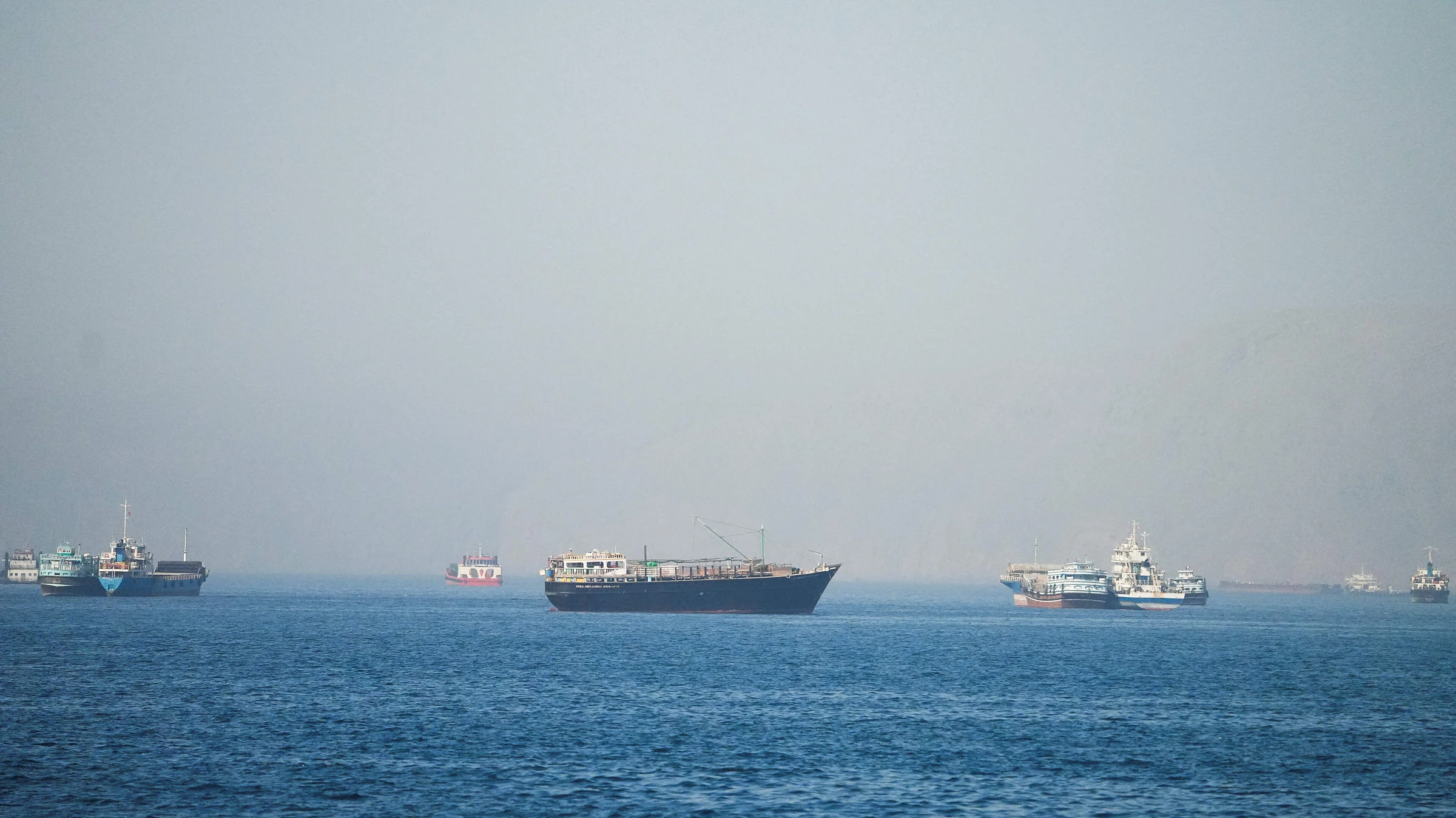
On 8 August, the United Arab Emirates said that an Iranian missile struck a vessel owned by ADNOC while it was transiting the Strait of Hormuz. According to the Associated Press report, UAE authorities attributed the incident to Iran and ADNOC said there were no casualties. The vessel’s name, cargo, precise location and extent of damage were not disclosed publicly.
Later the same day, the United Kingdom Maritime Trade Operations (UKMTO) centre reported that a vessel east of Khasab, Oman, had been hit by a projectile. AP reported that a fire was extinguished and that the vessel and crew were safe. It was not clear at publication whether the UKMTO report concerned the same ADNOC vessel or a separate incident. This distinction is operationally important and should not be assumed until confirmed by the operator, flag administration, coastal authorities or UKMTO.
The developments occur while talks involving Iran and Oman have reportedly focused on arrangements for safer inbound and outbound shipping lanes. No final, operationally reliable arrangement was announced as of 8 August. The IMO has previously expressed grave concern over attacks on international shipping in the region, while the UAE has said that disrupted navigation affects oil, gas, petrochemicals, fertilizers and other essential trade flows.
For shipowners and charterers, the immediate issue is not only physical damage risk but the possibility of short-notice changes to routing, port calls, bunker plans, crew exposure and cargo delivery commitments. A projectile strike near the Musandam approaches can affect vessels before or after passage through the Strait, not solely ships within the narrowest part of the waterway. Reliance on a single incident report, AIS picture or unverified social-media attribution would be unsafe in this environment.
**Why this matters:** Operators with Gulf calls should review voyage-specific security assessments, communications protocols, watchkeeping posture, contingency routes, safe-haven options and contractual notification procedures. Charterers and cargo interests should check whether delay, deviation, war-risk, force-majeure and additional-premium provisions respond to a deterioration that may be localized, intermittent and insufficiently defined by public reporting. P&I, hull and cargo insurers may require prompt notice of route changes or material changes in exposure. Masters should follow company security instructions and relevant official advisories, while avoiding unverified reporting or signals that could compromise vessel security.
At present, the reported incidents demonstrate continuing high-risk exposure, but the available public information does not establish that every reported strike involved the same vessel, cargo type or perpetrator.
Technology supported research and drafting. TWS retains editorial responsibility for the published content and cited sources.
Need operational support?