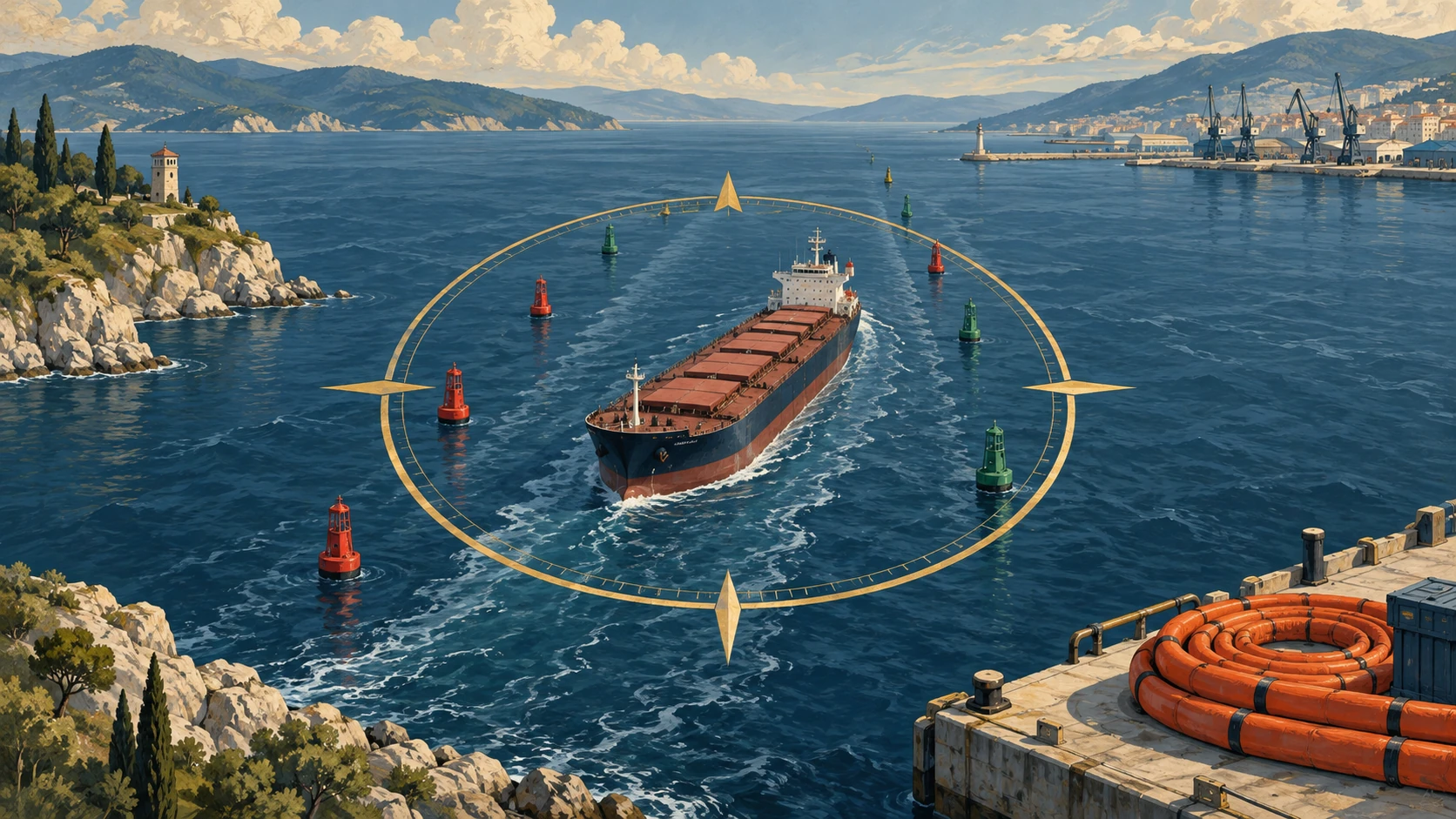
The IMO’s Sub-Committee on Carriage of Cargoes and Containers (CCC 12), which met in London from 14 to 18 September, advanced the development of interim guidelines for the safe use of onboard carbon capture and storage (OCCS) systems. The IMO described this as an important milestone in building a safety framework for new technologies; Russian Maritime Register of Shipping (RS), whose representatives attended the session, reported that CCC 12 began work on a package of OCCS safety guidelines.
This is not an approval of a technology, a mandatory carriage rule, or a confirmation that captured carbon will automatically earn a regulatory emissions credit. It is the start of technical rule-making intended to address barriers in existing IMO instruments before wider shipboard deployment. IMO material prepared for the work identifies several of those questions: how captured CO2 should be classified—for example, as waste, cargo or an overboard discharge—and whether the IMDG Code needs amendments for the storage and transport of CO2 produced by OCCS.
The distinction is operationally significant. An OCCS installation affects more than machinery design. It can introduce pressurised or refrigerated CO2 inventories, interfaces with exhaust treatment and cargo or waste systems, new alarms and emergency arrangements, crew competence needs, and port-side arrangements for offloading, reception and final storage. The applicable treatment may also affect statutory documentation, class review, flag acceptance, cargo-handling procedures and the contractual allocation of costs and operational risk.
For operators considering OCCS as a route to reduce vessel emissions while retaining conventional fuels, CCC 12 offers a regulatory signal but not a completed compliance pathway. A project should therefore avoid relying solely on projected emissions benefits. It should test, at an early design stage, whether flag State and class requirements are available; whether the ship’s intended ports can receive captured CO2; how custody, sampling and records will be managed; and whether charterparty, bunker and terminal arrangements allocate responsibility for delays, rejected offloads or system unavailability.
**Why this matters:** OCCS may become relevant to owners facing tightening carbon-intensity and fuel-transition decisions, particularly where alternative-fuel availability remains constrained. However, the IMO work is still formative. The immediate prudent action is evidence-building: preserve engineering assumptions, risk assessments, CO2 quantity and quality records, and port-interface procedures. Those records will be important for surveys, insurance discussions, contractual claims and any future emissions-accounting verification. Stakeholders should also keep safety-rule development separate from the unresolved question of how, and on what lifecycle basis, captured CO2 is recognised in IMO emissions accounting.
Technology supported research and drafting. TWS retains editorial responsibility for the published content and cited sources.
Need operational support?